



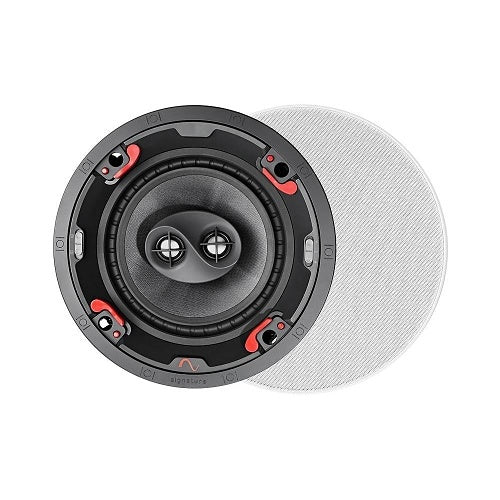
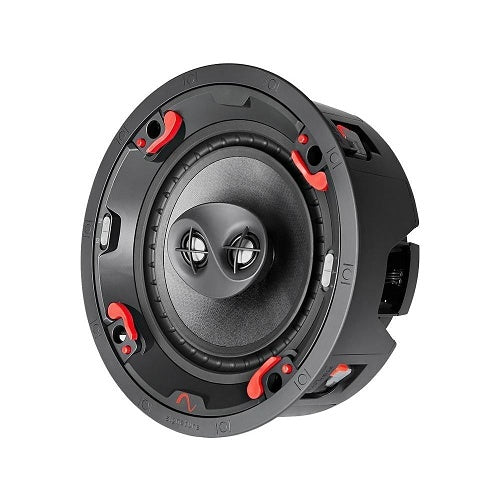
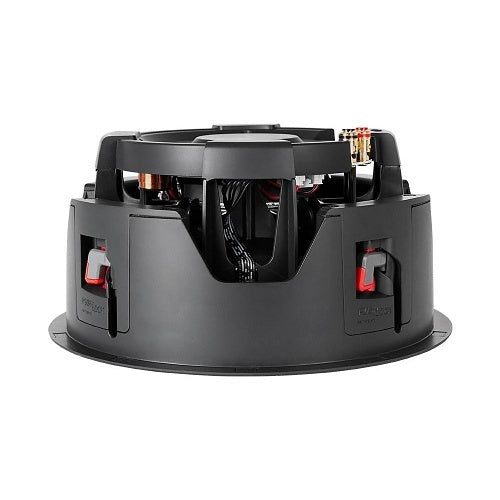
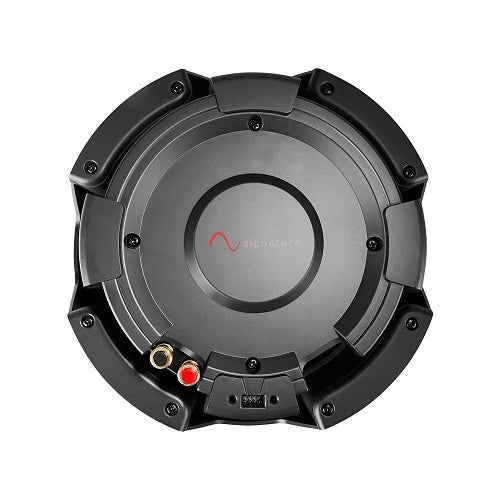
Episode Signature SIG-76-ICSURR 6" In-Ceiling Surround Speaker
Premium 6-inch in-ceiling surround speaker for dedicated home theaters and media rooms where wall-mounted surrounds are not practical. Features a honeycomb fiberglass Nomex woofer, dual 3/4-inch pure titanium tweeters, selectable bipole/dipole operation, 41Hz–20kHz response, 8-ohm impedance, 90 dB sensitivity, tweeter-level adjustment, and Push Lock by Swarm installation. Sold individually.
Tax excluded. Shipping calculated at checkout
Free U.S. shipping is available on orders over $499.99.
Personalized pricing may be available for a single item, multiple products, larger quantities, or competitive quotes.
Shipping Information
A tracking number is provided by email after the order has shipped. U.S. only: Orders usually process in 1 to 2 business days, with delivery typically taking 3 to 6 business days after shipment. Free shipping on orders over $499.99 For more information, please see our Shipping Policy here.
30 Day Returns & Warranty
We accept returns within 30 days of delivery for unused, uninstalled items in original packaging. Many products also include a manufacturer warranty. For more information, please see our Refund Policy here.
Official Product Resources
SIG-76-ICSURR Product Manual & Specs
View the official SIG-76-ICSURR manual for product specifications, setup details, wiring guidance, and installation reference before ordering.
Open SIG-76-ICSURR Manual PDFOpens the official PDF manual in a new tab, where you can view, save, or print the file from your browser.
Episode Signature SIG-76-ICSURR 6" In-Ceiling Surround Speaker
Product Details
Dedicated In-Ceiling Surround Sound with Bipole or Dipole Operation
The Episode SIG-76-ICSURR is a premium 6-inch Signature 7 Series in-ceiling surround speaker designed specifically for home theaters and media rooms where traditional wall-mounted side or rear surround speakers are not practical.
It combines a 6-inch honeycomb fiberglass Nomex woofer with dual 3/4-inch pure titanium tweeters, selectable bipole or dipole operation, wide 110-degree coverage, adjustable tweeter output, and Episode’s Push Lock by Swarm installation system.
Best Use Cases
- In-ceiling side surrounds: Creates a broad surround field when suitable wall locations are unavailable.
- In-ceiling rear surrounds: Adds rear-channel effects to compatible 7.1 or expanded home-theater layouts.
- Media rooms with limited wall space: Keeps speakers away from doors, windows, artwork, shelving, and furniture.
- Multi-seat theaters: Dual tweeters and wide dispersion help distribute surround effects across a larger seating area.
- Discreet architectural systems: Maintains a clean ceiling appearance with a thin-bezel paintable grille.
- Rooms requiring adjustable dispersion: The bipole/dipole switch allows the surround presentation to be matched more closely to the room and seating layout.
Who Should Buy This?
This is a strong choice if you are building a dedicated home theater and need side or rear surround channels installed in the ceiling rather than on the walls.
It makes particular sense when you want a more enveloping surround presentation, selectable bipole or dipole operation, broad coverage for several seats, premium driver materials, and flexible one-step or staged installation.
Who Should Not Buy This?
This is not the best choice for conventional left, center, or right front channels. A standard direct-radiating in-ceiling speaker, directional point speaker, in-wall speaker, or dedicated LCR model will normally provide more precise front-stage localization.
It is also not the default choice for dedicated Dolby Atmos height channels. Atmos height speakers are generally intended to create a distinct overhead layer, while the SIG-76-ICSURR is designed to produce a broad side- or rear-surround field.
This is not a dual-voice-coil stereo speaker. One SIG-76-ICSURR connects to one amplifier or AV-receiver channel and does not reproduce both left and right channels from a single speaker.
This model does not include a 70V transformer or selectable transformer taps. Do not connect it directly to a commercial 70V or 100V amplifier.
No outdoor or moisture rating is published for this speaker. Install it only in dry indoor locations.
Sold Individually
The Episode SIG-76-ICSURR is sold as one speaker. Most surround systems require at least two matching speakers, with each speaker connected to its own surround or rear-surround receiver channel.
Confirm the required quantity from the planned 5.1, 7.1, or expanded theater layout before ordering.
Selectable Bipole or Dipole Surround Modes
The front-mounted surround-mode switch allows the speaker to operate in bipole or dipole mode.
- Bipole mode: Generally provides a broad but more coherent surround presentation, with both tweeter sections contributing toward the listening area.
- Dipole mode: Creates a more diffuse presentation that can make the physical speaker location less obvious in suitable room layouts.
The best setting depends on speaker position, seating distance, room shape, number of rows, processor configuration, and personal preference. Begin with the mode recommended for the theater design, run the AV receiver’s room calibration, and compare both modes from the primary seats.
Dual Pure-Titanium Tweeters
The SIG-76-ICSURR uses two 3/4-inch pure titanium dome tweeters arranged to provide the broad dispersion required for surround-channel applications.
The dual-tweeter configuration works with the bipole/dipole switch to change how high-frequency surround information is distributed through the room.
Vented tweeter pods allow the tweeters to operate lower into the frequency range, supporting a lower crossover point and reducing the amount of upper-frequency material reproduced by the woofer.
Tweeter Compensation Control
A three-position tweeter adjustment provides +2 dB, 0 dB, or –2 dB output.
- +2 dB: Adds high-frequency output when the speaker is farther from the seats or the room contains heavily absorptive furnishings.
- 0 dB: Provides the recommended neutral starting point.
- –2 dB: Reduces high-frequency output in reflective rooms or when the speaker is close to the listening area.
Unlike the standard SIG-76-IC, this surround model does not publish a separate woofer-level adjustment. Its available controls are the bipole/dipole surround switch and tweeter compensation.
6-Inch Honeycomb Fiberglass Nomex Woofer
The 6-inch woofer uses a honeycomb fiberglass Nomex cone designed to combine low weight, rigidity, and controlled movement.
Episode publishes a frequency response of 41Hz to 20kHz, giving the speaker useful midbass capability for surround effects, ambient sound, and musical content.
Actual bass performance depends on ceiling construction, cavity volume, enclosure use, crossover configuration, room acoustics, and placement. A dedicated subwoofer should still handle the deepest low-frequency effects in a home-theater system.
Wide 110-Degree Coverage
The official published listening angle is 110 degrees. This broad coverage is useful for surround channels that must serve several seats rather than one narrow listening position.
Wide dispersion does not eliminate the need for correct placement. Speaker spacing, ceiling height, distance from the seats, and symmetry should be planned before making ceiling cutouts.
Amplifier and AV-Receiver Compatibility
- Speaker type: Passive in-ceiling bipole/dipole surround speaker.
- Series: Episode Signature 7 Series.
- Sold as: One speaker.
- Nominal impedance: 8 ohms.
- Power rating: 140W peak.
- Sensitivity: 90 dB.
- Frequency response: 41Hz to 20kHz.
- Crossover frequency: 2.5kHz.
- Woofer: 6-inch honeycomb fiberglass Nomex cone.
- Tweeters: Dual 3/4-inch pure titanium domes.
- Surround adjustment: Bipole or dipole.
- Tweeter adjustment: +2 dB, 0 dB, or –2 dB.
- Published listening angle: 110 degrees.
- Connections: Gold-plated push terminals.
- Internal amplifier: None; external amplification is required.
- 70V compatibility: No built-in transformer or selectable taps.
Use an AV receiver or amplifier that supports passive 8-ohm speakers. Connect each SIG-76-ICSURR to one dedicated surround or rear-surround channel.
The official 140W specification is a peak rating and should not be described as 140W RMS. Clean amplification, correct impedance support, suitable crossover settings, proper wiring, and avoiding audible clipping are more important than matching peak-wattage numbers directly.
Placement in a 5.1 System
In a 5.1 system, a matching pair may be used for the left and right surround channels when wall placement is unavailable.
Keep the two speakers reasonably symmetrical relative to the primary seating area. Avoid placing one speaker directly over a listener while the other is substantially farther away unless the room layout leaves no alternative.
Placement in a 7.1 System
A 7.1 system normally separates side-surround and rear-surround duties. Confirm whether the SIG-76-ICSURR will be used for the side pair, rear pair, or both before determining speaker quantity and cutout locations.
Follow the AV receiver or processor manufacturer’s channel-placement guidance and run its room-calibration system after installation.
Surround Channels vs. Dolby Atmos Height Channels
Surround and height channels serve different purposes. Surround channels create effects around and behind the listener, while height channels create a separate overhead layer.
Do not use the same physical speaker as both a surround and a height channel. When building an Atmos system, preserve enough separation between the surround layer and overhead layer for the processor to create distinct effects.
A standard SIG-76-IC or directional SIG-76-POINT may be a more appropriate choice for dedicated overhead height channels, depending on the room and speaker positions.
Installation Dimensions
- Ceiling cutout diameter: Approximately 8.3 inches.
- Finished diameter with grille: Approximately 9.6 inches.
- Mounting depth without enclosure: Approximately 4.8 inches.
- Mounting depth with compatible enclosure: Approximately 6.2 inches.
- Weight: Approximately 4.8 lb.
- Clamping range: Approximately 3/8-inch through double 1/2-inch ceiling material.
- Recommended open cavity volume: Approximately 15 to 20 liters.
Before Cutting the Ceiling
Confirm the full 8.3-inch cutout and check for joists, wiring, plumbing, HVAC ducts, recessed lighting, fire blocking, insulation, and other concealed obstructions.
Allow sufficient space for the 4.8-inch mounting depth, speaker wire, cable bend radius, mounting dogs, and recommended cavity volume.
Confirm the entire surround and height-speaker layout before making permanent cutouts. Moving one speaker after the ceiling has been cut can be difficult and may compromise symmetry.
Push Lock by Swarm Installation
Episode’s Push Lock by Swarm system uses spring-loaded mounting dogs that engage when the front buttons are pressed.
Once engaged, the dogs support the speaker in the ceiling while the installer completes final positioning and tightening. The mounting dogs can be cinched by up to approximately 6mm when additional pressure is required for uneven or layered ceiling material.
Only tighten each mounting dog after it has fully engaged behind the ceiling. Excessive tightening can damage the speaker frame or ceiling surface.
One-Step or Staged Two-Step Installation
The SIG-76-ICSURR can be installed as a complete assembled speaker-and-cradle system in one step.
For staged construction, the speaker core can be removed and the included cradle installed first. Wiring, a protective cover, and the optional enclosure can be completed while the speaker core remains protected from paint, sanding dust, insulation, and construction debris.
The speaker core can then be installed after the ceiling and surrounding construction work are finished.
Included Cradle and Optional Enclosure
The compatible Signature cradle is included with the speaker. The SIG-CRADLE-IC-6 is available separately for advance installation, replacement, or projects requiring an additional cradle.
The compatible ESS-ENCL-IC-6 enclosure is optional and sold separately. It can provide a more predictable acoustic volume, help reduce sound transfer into the space above, and keep insulation or construction debris away from the speaker.
When the enclosure is used, plan for approximately 6.2 inches of total mounting depth.
Grille and Construction Accessories
The standard installation uses a thin-bezel magnetic grille that can be painted to better match the ceiling.
The ES-ESS-BRKT-IC-6 pre-construction bracket is available separately for appropriate new-construction installations.
A true flush-mount installation requires the appropriate optional Episode flush-mount accessory and should be planned before the finished ceiling is completed.
Do not paint the woofer, tweeters, switches, terminals, mounting mechanism, or internal speaker components. Avoid blocking the grille perforations when painting.
Does It Need a Subwoofer?
Yes, a dedicated subwoofer is recommended for home-theater use. The SIG-76-ICSURR handles surround effects, ambience, and directional information, while the subwoofer reproduces the deepest low-frequency effects.
Use the AV receiver’s bass-management and crossover settings to integrate the surround speakers with the subwoofer.
When to Choose Another Episode Model
Choose the SIG-76-IC when you need a standard direct-radiating in-ceiling speaker for music or height-channel use rather than bipole/dipole surround operation.
Choose the SIG-78-ICSURR when you want an 8-inch woofer, stronger low-frequency capability, higher sensitivity, and a larger architectural footprint.
Choose the SIG-76-POINT when sound must be aimed toward the listening area from an off-center ceiling position.
Choose an Episode in-wall surround model when wall placement is possible and you want the surround layer positioned closer to seated ear level.
Good Products to Pair With This Speaker
- In-Wall & In-Ceiling Speakers to compare front, surround, height, DVC, and point-speaker options.
- Episode Speakers for matching front, center, surround, outdoor, and subwoofer models.
- Amplifiers for compatible AV receivers and home-theater amplification.
- Speaker Wires for properly rated in-wall speaker cable.
- Subwoofers for the low-frequency effects required by a complete theater system.
- Power Management Solutions to protect receivers, amplifiers, source components, and control equipment.
Need Help Planning Your Surround Layout?
Send us the room dimensions, ceiling height, seating position, AV receiver model, intended channel layout, and available speaker locations. We can help confirm speaker quantity, placement, amplifier compatibility, and whether this bipole/dipole surround model or another Episode speaker is the better fit.
Key Features
Surround Mode Switch for optimized surround sound performance.
Pure titanium dual tweeters for crisp and detailed high-frequency audio.
Honeycomb fiberglass woofer for deep, distortion-free bass.
Installed via a one-step or two-step process for easy installation.
Optional direct-mount backbox for enhanced sound isolation.
Tweeter Compensation Switch for customizable audio settings.
Flush-mount design for a seamless, discreet look.
Ribbed surround for added durability and sound clarity.
FAQ
What is the Episode SIG-76-ICSURR designed for?
It is designed as an in-ceiling side- or rear-surround speaker for home theaters and media rooms.
Is it sold individually or as a pair?
It is sold individually. Most surround systems require at least two matching speakers.
Is this a powered speaker?
No. It is a passive speaker that requires speaker wire and a compatible AV receiver or amplifier.
Does it include Bluetooth or Wi-Fi?
No. Streaming, Bluetooth, Wi-Fi, source selection, and app control must come from the connected receiver or source equipment.
What is the difference between bipole and dipole mode?
Bipole mode generally provides a broad but more coherent surround presentation. Dipole mode creates a more diffuse effect that can make the speaker location less obvious. The preferred setting depends on the room and seating layout.
How do I change between bipole and dipole mode?
Use the surround-mode switch located on the front of the speaker before installing the grille. Re-run or review the receiver calibration after changing modes.
Does it have one or two tweeters?
It uses two 3/4-inch pure titanium dome tweeters.
What does the tweeter adjustment control?
The tweeter switch provides +2 dB, 0 dB, and –2 dB settings to increase, maintain, or reduce high-frequency output.
Does it have a woofer-level adjustment?
The official specifications list bipole/dipole surround selection and tweeter adjustment. They do not list a separate woofer-level switch for this surround model.
What size woofer does it use?
It uses a 6-inch honeycomb fiberglass Nomex cone woofer.
What is the nominal impedance?
The speaker has an 8-ohm nominal impedance.
What is the correct power rating?
The official specification lists 140W peak power. It should not be described as a 140W RMS speaker.
What is the frequency response?
The published frequency response is 41Hz to 20kHz.
What is the sensitivity?
The published sensitivity is 90 dB.
What is the crossover frequency?
The published crossover frequency is 2.5kHz.
What is the published listening angle?
The official published listening angle is 110 degrees.
Is this a dual-voice-coil speaker?
No. It is a single-channel surround speaker with dual tweeters. One speaker connects to one receiver or amplifier channel.
Can one speaker reproduce both left and right stereo channels?
No. Use two speakers for left and right surround channels, with each connected to a separate receiver channel.
Can it connect to a 70V amplifier?
No. It does not include a 70V transformer or selectable transformer taps.
Can it be used in a 5.1 system?
Yes. A matching pair can be used for the left and right surround channels when ceiling placement is required.
Can it be used in a 7.1 system?
Yes. It can be used for side or rear surround duties when the placement and receiver configuration match the theater plan.
Can it be used for Dolby Atmos height channels?
It can reproduce sound from any compatible receiver channel, but it is specifically designed for diffuse side- or rear-surround use. A standard direct-radiating or directional in-ceiling speaker is generally a better starting point for dedicated Atmos height channels.
Can it be used as a front left or right speaker?
It is not the preferred model for front-stage use. Choose a standard in-ceiling, point, in-wall, or LCR speaker for more precise front-channel localization.
Does it need a subwoofer?
A dedicated subwoofer is recommended for home theater so the surround speaker can focus on effects, ambience, and directional information.
What ceiling cutout is required?
The required cutout diameter is approximately 8.3 inches.
What is the finished diameter?
The finished diameter with the standard grille installed is approximately 9.6 inches.
How much mounting depth is required?
Allow approximately 4.8 inches without an enclosure and approximately 6.2 inches with the compatible enclosure.
How much cavity volume is recommended?
Episode recommends approximately 15 to 20 liters of open cavity volume when the optional enclosure is not used.
What ceiling thickness can the mounting system support?
The published clamping range is approximately 3/8-inch through double 1/2-inch ceiling material.
How much does the speaker weigh?
The speaker weighs approximately 4.8 lb.
Does it include the Signature cradle?
Yes. The compatible cradle is included with the speaker.
Which additional cradle is compatible?
The compatible replacement or advance-installation cradle is the SIG-CRADLE-IC-6.
Which enclosure is compatible?
The compatible enclosure is the ESS-ENCL-IC-6, sold separately.
Which pre-construction bracket is compatible?
The compatible pre-construction bracket is the ES-ESS-BRKT-IC-6, sold separately.
Is a true flush-mount bracket included?
No. The standard speaker uses a thin-bezel magnetic grille. A true flush-mount installation requires the appropriate optional Episode accessory.
Can the grille be painted?
Yes. The magnetic grille can be painted when prepared according to Episode’s instructions. Avoid blocking the grille perforations.
Can it be installed outdoors or in a shower?
No outdoor or moisture rating is published for this model. Install it only in dry indoor locations.
What should I check before ordering?
Check speaker quantity, receiver channel layout, bipole or dipole requirements, ceiling cutout, mounting depth, joist locations, cavity volume, wire routing, seating position, and whether an optional enclosure or construction bracket is required.
Dedicated In-Ceiling Surround Sound with Bipole or Dipole Operation
The Episode SIG-76-ICSURR is a premium 6-inch Signature 7 Series in-ceiling surround speaker designed specifically for home theaters and media rooms where traditional wall-mounted side or rear surround speakers are not practical.
It combines a 6-inch honeycomb fiberglass Nomex woofer with dual 3/4-inch pure titanium tweeters, selectable bipole or dipole operation, wide 110-degree coverage, adjustable tweeter output, and Episode’s Push Lock by Swarm installation system.
Best Use Cases
- In-ceiling side surrounds: Creates a broad surround field when suitable wall locations are unavailable.
- In-ceiling rear surrounds: Adds rear-channel effects to compatible 7.1 or expanded home-theater layouts.
- Media rooms with limited wall space: Keeps speakers away from doors, windows, artwork, shelving, and furniture.
- Multi-seat theaters: Dual tweeters and wide dispersion help distribute surround effects across a larger seating area.
- Discreet architectural systems: Maintains a clean ceiling appearance with a thin-bezel paintable grille.
- Rooms requiring adjustable dispersion: The bipole/dipole switch allows the surround presentation to be matched more closely to the room and seating layout.
Who Should Buy This?
This is a strong choice if you are building a dedicated home theater and need side or rear surround channels installed in the ceiling rather than on the walls.
It makes particular sense when you want a more enveloping surround presentation, selectable bipole or dipole operation, broad coverage for several seats, premium driver materials, and flexible one-step or staged installation.
Who Should Not Buy This?
This is not the best choice for conventional left, center, or right front channels. A standard direct-radiating in-ceiling speaker, directional point speaker, in-wall speaker, or dedicated LCR model will normally provide more precise front-stage localization.
It is also not the default choice for dedicated Dolby Atmos height channels. Atmos height speakers are generally intended to create a distinct overhead layer, while the SIG-76-ICSURR is designed to produce a broad side- or rear-surround field.
This is not a dual-voice-coil stereo speaker. One SIG-76-ICSURR connects to one amplifier or AV-receiver channel and does not reproduce both left and right channels from a single speaker.
This model does not include a 70V transformer or selectable transformer taps. Do not connect it directly to a commercial 70V or 100V amplifier.
No outdoor or moisture rating is published for this speaker. Install it only in dry indoor locations.
Sold Individually
The Episode SIG-76-ICSURR is sold as one speaker. Most surround systems require at least two matching speakers, with each speaker connected to its own surround or rear-surround receiver channel.
Confirm the required quantity from the planned 5.1, 7.1, or expanded theater layout before ordering.
Selectable Bipole or Dipole Surround Modes
The front-mounted surround-mode switch allows the speaker to operate in bipole or dipole mode.
- Bipole mode: Generally provides a broad but more coherent surround presentation, with both tweeter sections contributing toward the listening area.
- Dipole mode: Creates a more diffuse presentation that can make the physical speaker location less obvious in suitable room layouts.
The best setting depends on speaker position, seating distance, room shape, number of rows, processor configuration, and personal preference. Begin with the mode recommended for the theater design, run the AV receiver’s room calibration, and compare both modes from the primary seats.
Dual Pure-Titanium Tweeters
The SIG-76-ICSURR uses two 3/4-inch pure titanium dome tweeters arranged to provide the broad dispersion required for surround-channel applications.
The dual-tweeter configuration works with the bipole/dipole switch to change how high-frequency surround information is distributed through the room.
Vented tweeter pods allow the tweeters to operate lower into the frequency range, supporting a lower crossover point and reducing the amount of upper-frequency material reproduced by the woofer.
Tweeter Compensation Control
A three-position tweeter adjustment provides +2 dB, 0 dB, or –2 dB output.
- +2 dB: Adds high-frequency output when the speaker is farther from the seats or the room contains heavily absorptive furnishings.
- 0 dB: Provides the recommended neutral starting point.
- –2 dB: Reduces high-frequency output in reflective rooms or when the speaker is close to the listening area.
Unlike the standard SIG-76-IC, this surround model does not publish a separate woofer-level adjustment. Its available controls are the bipole/dipole surround switch and tweeter compensation.
6-Inch Honeycomb Fiberglass Nomex Woofer
The 6-inch woofer uses a honeycomb fiberglass Nomex cone designed to combine low weight, rigidity, and controlled movement.
Episode publishes a frequency response of 41Hz to 20kHz, giving the speaker useful midbass capability for surround effects, ambient sound, and musical content.
Actual bass performance depends on ceiling construction, cavity volume, enclosure use, crossover configuration, room acoustics, and placement. A dedicated subwoofer should still handle the deepest low-frequency effects in a home-theater system.
Wide 110-Degree Coverage
The official published listening angle is 110 degrees. This broad coverage is useful for surround channels that must serve several seats rather than one narrow listening position.
Wide dispersion does not eliminate the need for correct placement. Speaker spacing, ceiling height, distance from the seats, and symmetry should be planned before making ceiling cutouts.
Amplifier and AV-Receiver Compatibility
- Speaker type: Passive in-ceiling bipole/dipole surround speaker.
- Series: Episode Signature 7 Series.
- Sold as: One speaker.
- Nominal impedance: 8 ohms.
- Power rating: 140W peak.
- Sensitivity: 90 dB.
- Frequency response: 41Hz to 20kHz.
- Crossover frequency: 2.5kHz.
- Woofer: 6-inch honeycomb fiberglass Nomex cone.
- Tweeters: Dual 3/4-inch pure titanium domes.
- Surround adjustment: Bipole or dipole.
- Tweeter adjustment: +2 dB, 0 dB, or –2 dB.
- Published listening angle: 110 degrees.
- Connections: Gold-plated push terminals.
- Internal amplifier: None; external amplification is required.
- 70V compatibility: No built-in transformer or selectable taps.
Use an AV receiver or amplifier that supports passive 8-ohm speakers. Connect each SIG-76-ICSURR to one dedicated surround or rear-surround channel.
The official 140W specification is a peak rating and should not be described as 140W RMS. Clean amplification, correct impedance support, suitable crossover settings, proper wiring, and avoiding audible clipping are more important than matching peak-wattage numbers directly.
Placement in a 5.1 System
In a 5.1 system, a matching pair may be used for the left and right surround channels when wall placement is unavailable.
Keep the two speakers reasonably symmetrical relative to the primary seating area. Avoid placing one speaker directly over a listener while the other is substantially farther away unless the room layout leaves no alternative.
Placement in a 7.1 System
A 7.1 system normally separates side-surround and rear-surround duties. Confirm whether the SIG-76-ICSURR will be used for the side pair, rear pair, or both before determining speaker quantity and cutout locations.
Follow the AV receiver or processor manufacturer’s channel-placement guidance and run its room-calibration system after installation.
Surround Channels vs. Dolby Atmos Height Channels
Surround and height channels serve different purposes. Surround channels create effects around and behind the listener, while height channels create a separate overhead layer.
Do not use the same physical speaker as both a surround and a height channel. When building an Atmos system, preserve enough separation between the surround layer and overhead layer for the processor to create distinct effects.
A standard SIG-76-IC or directional SIG-76-POINT may be a more appropriate choice for dedicated overhead height channels, depending on the room and speaker positions.
Installation Dimensions
- Ceiling cutout diameter: Approximately 8.3 inches.
- Finished diameter with grille: Approximately 9.6 inches.
- Mounting depth without enclosure: Approximately 4.8 inches.
- Mounting depth with compatible enclosure: Approximately 6.2 inches.
- Weight: Approximately 4.8 lb.
- Clamping range: Approximately 3/8-inch through double 1/2-inch ceiling material.
- Recommended open cavity volume: Approximately 15 to 20 liters.
Before Cutting the Ceiling
Confirm the full 8.3-inch cutout and check for joists, wiring, plumbing, HVAC ducts, recessed lighting, fire blocking, insulation, and other concealed obstructions.
Allow sufficient space for the 4.8-inch mounting depth, speaker wire, cable bend radius, mounting dogs, and recommended cavity volume.
Confirm the entire surround and height-speaker layout before making permanent cutouts. Moving one speaker after the ceiling has been cut can be difficult and may compromise symmetry.
Push Lock by Swarm Installation
Episode’s Push Lock by Swarm system uses spring-loaded mounting dogs that engage when the front buttons are pressed.
Once engaged, the dogs support the speaker in the ceiling while the installer completes final positioning and tightening. The mounting dogs can be cinched by up to approximately 6mm when additional pressure is required for uneven or layered ceiling material.
Only tighten each mounting dog after it has fully engaged behind the ceiling. Excessive tightening can damage the speaker frame or ceiling surface.
One-Step or Staged Two-Step Installation
The SIG-76-ICSURR can be installed as a complete assembled speaker-and-cradle system in one step.
For staged construction, the speaker core can be removed and the included cradle installed first. Wiring, a protective cover, and the optional enclosure can be completed while the speaker core remains protected from paint, sanding dust, insulation, and construction debris.
The speaker core can then be installed after the ceiling and surrounding construction work are finished.
Included Cradle and Optional Enclosure
The compatible Signature cradle is included with the speaker. The SIG-CRADLE-IC-6 is available separately for advance installation, replacement, or projects requiring an additional cradle.
The compatible ESS-ENCL-IC-6 enclosure is optional and sold separately. It can provide a more predictable acoustic volume, help reduce sound transfer into the space above, and keep insulation or construction debris away from the speaker.
When the enclosure is used, plan for approximately 6.2 inches of total mounting depth.
Grille and Construction Accessories
The standard installation uses a thin-bezel magnetic grille that can be painted to better match the ceiling.
The ES-ESS-BRKT-IC-6 pre-construction bracket is available separately for appropriate new-construction installations.
A true flush-mount installation requires the appropriate optional Episode flush-mount accessory and should be planned before the finished ceiling is completed.
Do not paint the woofer, tweeters, switches, terminals, mounting mechanism, or internal speaker components. Avoid blocking the grille perforations when painting.
Does It Need a Subwoofer?
Yes, a dedicated subwoofer is recommended for home-theater use. The SIG-76-ICSURR handles surround effects, ambience, and directional information, while the subwoofer reproduces the deepest low-frequency effects.
Use the AV receiver’s bass-management and crossover settings to integrate the surround speakers with the subwoofer.
When to Choose Another Episode Model
Choose the SIG-76-IC when you need a standard direct-radiating in-ceiling speaker for music or height-channel use rather than bipole/dipole surround operation.
Choose the SIG-78-ICSURR when you want an 8-inch woofer, stronger low-frequency capability, higher sensitivity, and a larger architectural footprint.
Choose the SIG-76-POINT when sound must be aimed toward the listening area from an off-center ceiling position.
Choose an Episode in-wall surround model when wall placement is possible and you want the surround layer positioned closer to seated ear level.
Good Products to Pair With This Speaker
- In-Wall & In-Ceiling Speakers to compare front, surround, height, DVC, and point-speaker options.
- Episode Speakers for matching front, center, surround, outdoor, and subwoofer models.
- Amplifiers for compatible AV receivers and home-theater amplification.
- Speaker Wires for properly rated in-wall speaker cable.
- Subwoofers for the low-frequency effects required by a complete theater system.
- Power Management Solutions to protect receivers, amplifiers, source components, and control equipment.
Need Help Planning Your Surround Layout?
Send us the room dimensions, ceiling height, seating position, AV receiver model, intended channel layout, and available speaker locations. We can help confirm speaker quantity, placement, amplifier compatibility, and whether this bipole/dipole surround model or another Episode speaker is the better fit.
Surround Mode Switch for optimized surround sound performance.
Pure titanium dual tweeters for crisp and detailed high-frequency audio.
Honeycomb fiberglass woofer for deep, distortion-free bass.
Installed via a one-step or two-step process for easy installation.
Optional direct-mount backbox for enhanced sound isolation.
Tweeter Compensation Switch for customizable audio settings.
Flush-mount design for a seamless, discreet look.
Ribbed surround for added durability and sound clarity.
What is the Episode SIG-76-ICSURR designed for?
It is designed as an in-ceiling side- or rear-surround speaker for home theaters and media rooms.
Is it sold individually or as a pair?
It is sold individually. Most surround systems require at least two matching speakers.
Is this a powered speaker?
No. It is a passive speaker that requires speaker wire and a compatible AV receiver or amplifier.
Does it include Bluetooth or Wi-Fi?
No. Streaming, Bluetooth, Wi-Fi, source selection, and app control must come from the connected receiver or source equipment.
What is the difference between bipole and dipole mode?
Bipole mode generally provides a broad but more coherent surround presentation. Dipole mode creates a more diffuse effect that can make the speaker location less obvious. The preferred setting depends on the room and seating layout.
How do I change between bipole and dipole mode?
Use the surround-mode switch located on the front of the speaker before installing the grille. Re-run or review the receiver calibration after changing modes.
Does it have one or two tweeters?
It uses two 3/4-inch pure titanium dome tweeters.
What does the tweeter adjustment control?
The tweeter switch provides +2 dB, 0 dB, and –2 dB settings to increase, maintain, or reduce high-frequency output.
Does it have a woofer-level adjustment?
The official specifications list bipole/dipole surround selection and tweeter adjustment. They do not list a separate woofer-level switch for this surround model.
What size woofer does it use?
It uses a 6-inch honeycomb fiberglass Nomex cone woofer.
What is the nominal impedance?
The speaker has an 8-ohm nominal impedance.
What is the correct power rating?
The official specification lists 140W peak power. It should not be described as a 140W RMS speaker.
What is the frequency response?
The published frequency response is 41Hz to 20kHz.
What is the sensitivity?
The published sensitivity is 90 dB.
What is the crossover frequency?
The published crossover frequency is 2.5kHz.
What is the published listening angle?
The official published listening angle is 110 degrees.
Is this a dual-voice-coil speaker?
No. It is a single-channel surround speaker with dual tweeters. One speaker connects to one receiver or amplifier channel.
Can one speaker reproduce both left and right stereo channels?
No. Use two speakers for left and right surround channels, with each connected to a separate receiver channel.
Can it connect to a 70V amplifier?
No. It does not include a 70V transformer or selectable transformer taps.
Can it be used in a 5.1 system?
Yes. A matching pair can be used for the left and right surround channels when ceiling placement is required.
Can it be used in a 7.1 system?
Yes. It can be used for side or rear surround duties when the placement and receiver configuration match the theater plan.
Can it be used for Dolby Atmos height channels?
It can reproduce sound from any compatible receiver channel, but it is specifically designed for diffuse side- or rear-surround use. A standard direct-radiating or directional in-ceiling speaker is generally a better starting point for dedicated Atmos height channels.
Can it be used as a front left or right speaker?
It is not the preferred model for front-stage use. Choose a standard in-ceiling, point, in-wall, or LCR speaker for more precise front-channel localization.
Does it need a subwoofer?
A dedicated subwoofer is recommended for home theater so the surround speaker can focus on effects, ambience, and directional information.
What ceiling cutout is required?
The required cutout diameter is approximately 8.3 inches.
What is the finished diameter?
The finished diameter with the standard grille installed is approximately 9.6 inches.
How much mounting depth is required?
Allow approximately 4.8 inches without an enclosure and approximately 6.2 inches with the compatible enclosure.
How much cavity volume is recommended?
Episode recommends approximately 15 to 20 liters of open cavity volume when the optional enclosure is not used.
What ceiling thickness can the mounting system support?
The published clamping range is approximately 3/8-inch through double 1/2-inch ceiling material.
How much does the speaker weigh?
The speaker weighs approximately 4.8 lb.
Does it include the Signature cradle?
Yes. The compatible cradle is included with the speaker.
Which additional cradle is compatible?
The compatible replacement or advance-installation cradle is the SIG-CRADLE-IC-6.
Which enclosure is compatible?
The compatible enclosure is the ESS-ENCL-IC-6, sold separately.
Which pre-construction bracket is compatible?
The compatible pre-construction bracket is the ES-ESS-BRKT-IC-6, sold separately.
Is a true flush-mount bracket included?
No. The standard speaker uses a thin-bezel magnetic grille. A true flush-mount installation requires the appropriate optional Episode accessory.
Can the grille be painted?
Yes. The magnetic grille can be painted when prepared according to Episode’s instructions. Avoid blocking the grille perforations.
Can it be installed outdoors or in a shower?
No outdoor or moisture rating is published for this model. Install it only in dry indoor locations.
What should I check before ordering?
Check speaker quantity, receiver channel layout, bipole or dipole requirements, ceiling cutout, mounting depth, joist locations, cavity volume, wire routing, seating position, and whether an optional enclosure or construction bracket is required.
RELATED PRODUCTS
Discover Other Products You Might Like and Simplify Your Search
Why Customers Keep Coming Back
Real feedback from customers nationwide on our service, shipping, and support.

M. from New Jersey
Outstanding customer service speakers arrived cross country Cali to New Jersey in spectacular condition.
Great communication great packaging would buy again.
R. from California
Easy ordering and super fast standard shipping. Great experience and highly recommended.
G. from Texas
Place a large order and was able to accommodate me quickly and parts were delivered as promised

M. from Louisiana
Product arrived quickly and in good condition. The price was very competitive. I’m very satisfied. I highly recommend the seller.
B. from Texas
Arrived promptly & in excellent condition with all required parts. Sounds great and impedance matches other speakers.
S. from Florida
Excellent customer service! Picks up the phone. Fast delivery across the country. Worthy online retailer!
G. from Texas
Bear Security Shop has a great customer service, and is fast and easy to do business with. I've ordered product from them twice with great service both times. Would definitely recommend them.
J. from Los Angeles
Excellent customer service. Lightning fast shipping. Very grateful for the team at Bear Security. Thank you!
T. from Oklahoma
Trustworthy, honest, and plus integrity, with outstanding professionalism! I highly recommend them buy with confidence!

C. from Colorado
Experience with Bear Security Shop was fast and easy and the speakers arrived less than we week after ordering. And the price was half what my installer wanted to charge me for these speakers. Highly recommended.
V. from California
Excellent communication. Prompt responses and very knowledgeable and helpful. Items arrived faster than expected and in brand new condition as described. Will continue to do business with them.
C. from South Dakota
Awesome camras well worth the money good seller would buy again 👍
Get Expert Picks and Real Setup Advice
Subscribe for practical tips, product recommendations, and occasional subscriber only deals. No spam.