



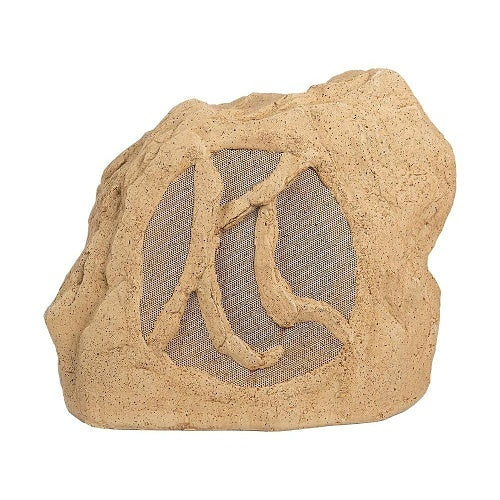
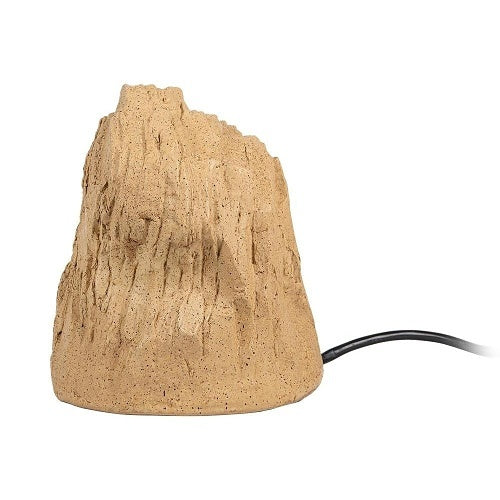
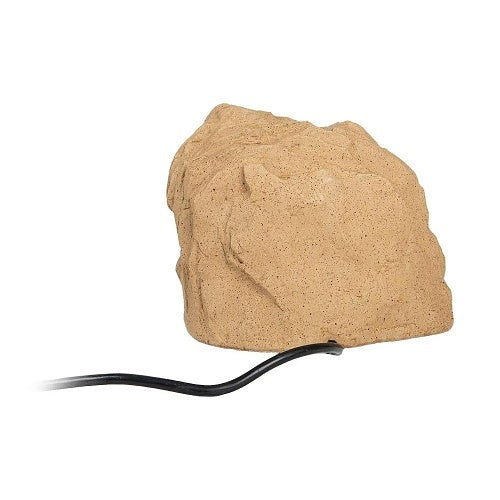
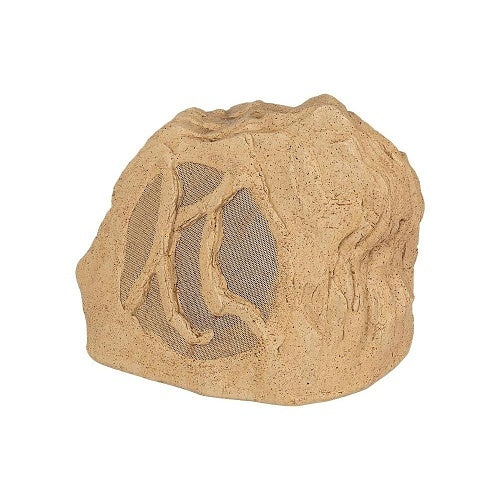
Episode Outdoor Rock ES-ROCK-6 Speaker 6.5 Inch Woofer All-Weather
Discreet 6.5-inch outdoor rock speaker for patios, gardens, poolside seating areas, and backyard audio zones. Features a polypropylene woofer, 1-inch titanium tweeter, 66Hz–20kHz response, 6-ohm impedance, 110W RMS handling, IPX5 protection, and a realistic Granite or Sandstone finish. Sold individually; external amplification required.
Tax excluded. Shipping calculated at checkout
Free U.S. shipping is available on orders over $499.99.
Personalized pricing may be available for a single item, multiple products, larger quantities, or competitive quotes.
Before You Buy
Check compatibility, what’s included, key specifications, and installation requirements in the Product Details below. Need help confirming compatibility? Contact us before ordering.
Shipping Information
A tracking number is provided by email after the order has shipped. U.S. only: Orders usually process in 1 to 2 business days, with delivery typically taking 3 to 6 business days after shipment. Free shipping on orders over $499.99 For more information, please see our Shipping Policy here.
30 Day Returns & Warranty
We accept returns within 30 days of delivery for unused, uninstalled items in original packaging. Many products also include a manufacturer warranty. For more information, please see our Refund Policy here.
Official Product Resources
ES-ROCK-6-SAN Product Manual & Specs
View the official ES-ROCK-6-SAN manual for product specifications, setup details, wiring guidance, and installation reference before ordering.
Open ES-ROCK-6-SAN Manual PDFOpens the official PDF manual in a new tab, where you can view, save, or print the file from your browser.
Episode Outdoor Rock ES-ROCK-6 Speaker 6.5 Inch Woofer All-Weather
Product Details
Outdoor Sound That Blends Into the Landscape
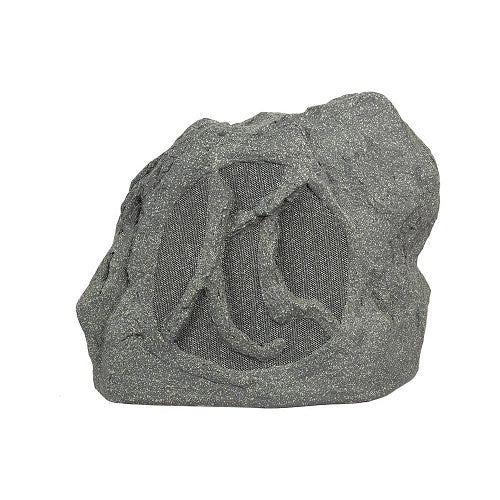
The Episode ES-ROCK-6 is a compact 6.5-inch outdoor rock speaker designed for patios, gardens, poolside seating areas, landscaped yards, and backyard entertainment spaces where a conventional speaker cabinet would be visually distracting.
It combines a 6.5-inch polypropylene woofer, one 1-inch titanium dome tweeter, 110W RMS power handling, a published 66Hz–20kHz frequency response, IPX5 weather resistance, and a realistic rock enclosure available in Granite or Sandstone.
The ES-ROCK-6 is sold individually. A conventional stereo outdoor zone normally requires two speakers and a compatible amplifier that supports a 6-ohm load.
Best Use Cases
- Patios and decks: Add permanently installed outdoor audio without mounting visible cabinets to the home.
- Gardens and landscaped yards: Blend the speaker into gravel, mulch, planting beds, and natural stone features.
- Poolside seating areas: Provide music near suitable lounge and seating zones without placing a speaker in the water.
- Backyard music systems: Create a wired stereo zone for outdoor dining, relaxing, and entertaining.
- Smaller outdoor areas: The more compact enclosure is easier to place discreetly than the larger ES-ROCK-8.
- Conventional stereo systems: Use one speaker for the left channel and one for the right channel.
Who Should Buy This?
This is a strong choice if you want a passive outdoor speaker that blends into landscaping while providing fuller sound than a small landscape satellite.
It is particularly suitable for a conventional wired stereo or multi-zone system where the amplifier supports a 6-ohm passive speaker load.
Who Should Not Buy This?
This is not a powered or wireless speaker. It requires outdoor-rated speaker wire and a compatible external amplifier. It does not include Bluetooth, Wi-Fi, a battery, a power cord, or an internal amplifier.
It is not a 70V or 100V distributed-audio speaker. This model has no transformer taps or 8-ohm bypass selector.
It is not a dual-voice-coil stereo speaker. One ES-ROCK-6 connects to one amplifier channel and cannot reproduce both left and right channels by itself.
It is also not a dedicated subwoofer. A compatible outdoor subwoofer may be needed when deeper bass or higher-impact music is important.
Sold Individually
The Episode ES-ROCK-6 is sold as one speaker.
For conventional stereo listening, use two speakers: one connected to the amplifier’s left channel and one connected to its right channel.
Larger or irregularly shaped areas may require additional speakers to maintain consistent coverage without operating one pair at excessive volume.
Single-Voice-Coil Design
The ES-ROCK-6 uses one voice coil and one speaker-wire input.
Each speaker connects to one amplifier channel. A stereo pair therefore requires two ES-ROCK-6 speakers.
This model should not be confused with the separate ES-ROCK-DVC-6, which includes two voice coils and can reproduce left and right stereo channels from one physical speaker location.
6.5-Inch Polypropylene Woofer
The speaker uses a 6.5-inch injection-molded polypropylene cone woofer with an overmolded Santoprene surround.
A Nomex spider and high-temperature voice coil support controlled woofer movement during extended outdoor listening.
The 6.5-inch woofer provides useful bass and midrange for patios and smaller backyard areas while allowing the enclosure to remain more compact than the 8-inch model.
1-Inch Titanium Tweeter
One 1-inch titanium dome tweeter reproduces vocals, instruments, and high-frequency detail.
The tweeter uses a neodymium motor and ferrofluid cooling. This single-voice-coil model has one tweeter and should not be described as a dual-tweeter speaker.
66Hz–20kHz Frequency Response
The published frequency response is 66Hz to 20kHz, with a 2.8kHz crossover between the woofer and tweeter.
This provides useful supporting bass for general outdoor music, but open spaces do not reinforce low frequencies as strongly as indoor rooms.
For bass-heavy music or larger entertainment areas, add a compatible outdoor subwoofer rather than expecting the rock speaker to reproduce the deepest frequencies by itself.
110W RMS Power Handling
The official specification lists 110W RMS power handling.
This does not mean that every system requires a 110W amplifier or that any amplifier labeled 110W is automatically compatible.
Amplifier selection should consider the speaker’s 6-ohm impedance, cable distance, outdoor-area size, preferred volume, amplifier quality, and the number of speakers connected to each channel.
Important 6-Ohm Impedance
The ES-ROCK-6 has a 6-ohm nominal impedance, not 8 ohms and not 2 ohms.
Use an amplifier or receiver specifically rated to support a 6-ohm speaker load.
A simple stereo installation normally connects one speaker to each amplifier channel. Connecting multiple speakers to one channel changes the total impedance and must be calculated before powering the system.
Two 6-ohm speakers connected in parallel create approximately a 3-ohm load, which many amplifiers are not designed to support. Do not wire multiple speakers in parallel without confirming the amplifier’s minimum impedance.
Amplifier Compatibility
- Speaker type: Passive two-way outdoor rock speaker.
- Sold as: One speaker.
- Voice-coil configuration: Single voice coil.
- Nominal impedance: 6 ohms.
- Power handling: 110W RMS.
- Sensitivity: 86 dB.
- Frequency response: 66Hz to 20kHz.
- Crossover frequency: 2.8kHz.
- 70V or 100V operation: Not supported.
- Internal amplifier: None; external amplification is required.
Using Two Speakers for Stereo
For stereo listening, place one ES-ROCK-6 on the left side of the listening area and a second speaker on the right.
The most balanced listening area is normally positioned at a reasonably similar distance from both speakers.
Avoid placing one speaker behind dense landscaping or furniture while the other has a clear path to the listeners.
Using Several Speakers Across a Yard
Larger outdoor areas generally perform better with several speakers distributed closer to the listeners rather than one pair operating loudly from a distant location.
Additional speakers may require a multi-zone amplifier, speaker selector with appropriate impedance protection, or another correctly engineered wiring arrangement.
Do not assume that several 6-ohm speakers can be connected to one amplifier channel safely.
IPX5 Weather Resistance
The ES-ROCK-6 carries an IPX5 weather-resistance rating.
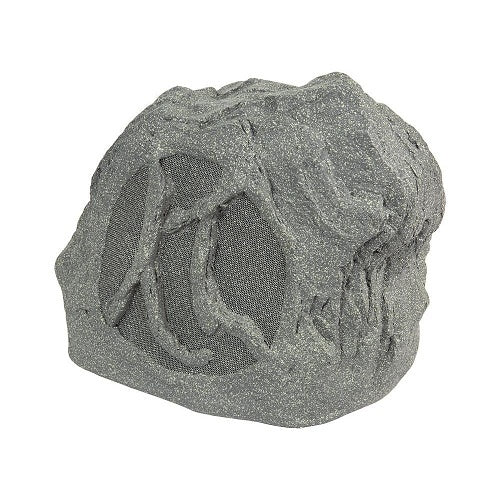
Its construction includes a UV-treated cabinet, stainless-steel hardware, an aluminum micro-perforated grille, weather-resistant components, and outdoor-ready driver materials.
IPX5 indicates resistance to water jets under the rating’s test conditions. It does not make the speaker submersible or suitable for installation inside a pool, pond, fountain, or area of permanent standing water.
Realistic Rock Enclosure
The enclosure is constructed from a compound of unsaturated polyester resin, fiberglass, and talc powder.
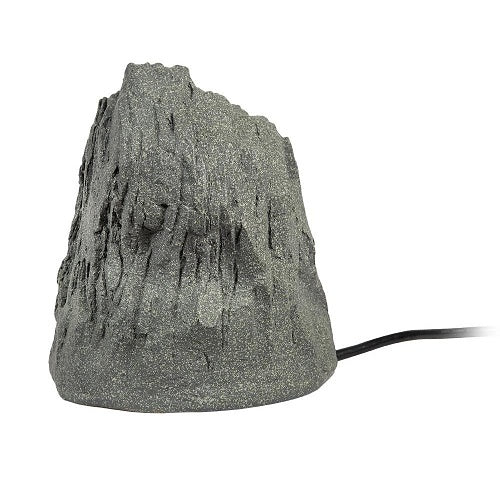
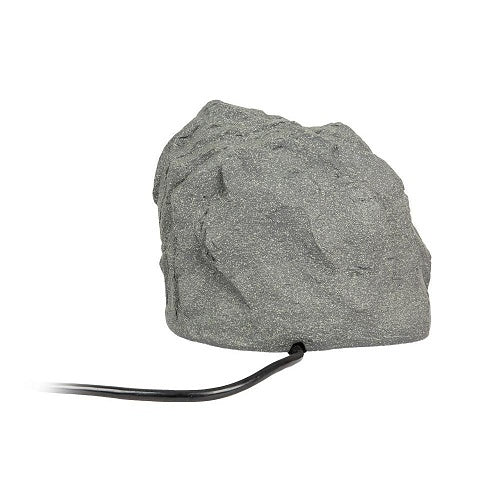
Its irregular rock shape and textured finish allow it to blend more naturally with outdoor landscaping than a conventional rectangular loudspeaker cabinet.
Granite or Sandstone Finish
- Granite: Pairs well with darker rocks, gray gravel, dark mulch, and contemporary landscaping.
- Sandstone: Blends with tan stone, lighter gravel, desert landscaping, and warmer exterior finishes.
Granite and Sandstone are separate color variants. Select the finish that best matches the surrounding landscape.
Placement Guidance
Place the speaker reasonably close to the intended listening area rather than at the far edge of the property.
Avoid installing it behind thick plants, furniture, walls, or decorative structures that may block the sound.
Do not position it close to a high-pressure sprinkler. Direct sprinkler impact may damage the speaker despite its outdoor weather rating.
Account for future plant growth and landscaping changes so the speaker does not become covered or obstructed.
Speaker-Wire Connections
The ES-ROCK-6 uses stripped red and black speaker leads and includes silicone-filled wire nuts for permanent outdoor connections.
Connect the red lead to the amplifier’s positive terminal and the black lead to the negative terminal.
The included wire nuts are intended for permanent installation. If rewiring becomes necessary, remove the used connectors and install new suitable weather-resistant connectors.
Recommended Speaker Wire
Episode recommends high-quality 14- to 16-gauge stranded speaker wire.
Use direct-burial-rated speaker cable when installing the wiring underground without conduit.
The final cable gauge should account for wire distance, amplifier power, speaker impedance, and the installation method.
Correct Speaker Polarity
Maintain positive-to-positive and negative-to-negative polarity throughout the system.
Incorrect polarity can reduce bass and make vocals sound thin, distant, or inconsistent between listening positions.
Verify polarity before permanently sealing the outdoor wire connections.
Cleaning and Maintenance
Keep the grille clear of dirt, leaves, and insects.
Episode recommends rinsing the speaker with low-pressure water from a garden hose.
Do not use a pressure washer or apply fertilizers, insect sprays, deck sealants, cleaning chemicals, or other landscaping products to the speaker.
Cold-Weather Guidance
Episode states that the rock-speaker family was tested from approximately -2°F to 120°F.
The manual instructs users not to play the speakers when the temperature is below freezing and recommends storing them indoors where winter temperatures fall below the rated range.
The product should therefore not be described as suitable for unrestricted operation in every climate throughout the entire year.
Technical Specifications
- Product type: Passive outdoor rock speaker.
- Model: ES-ROCK-6.
- Sold as: One speaker.
- Available finishes: Granite or Sandstone.
- Woofer: 6.5-inch injection-molded polypropylene cone.
- Woofer surround: Overmolded Santoprene.
- Woofer suspension: Nomex spider.
- Voice coil: High-temperature single voice coil.
- Tweeter: One 1-inch titanium dome.
- Tweeter motor: Neodymium.
- Tweeter cooling: Ferrofluid.
- Frequency response: 66Hz to 20kHz.
- Crossover frequency: 2.8kHz.
- Nominal impedance: 6 ohms.
- Power handling: 110W RMS.
- Sensitivity: 86 dB.
- Weather rating: IPX5.
- Grille: Aluminum micro-perforated mesh.
- Connections: Stripped wire leads with silicone-filled wire nuts included.
- Internal amplifier: None.
- Warranty: Limited lifetime manufacturer warranty, subject to current warranty terms.
Dimensions and Weight
- Width: Approximately 10.4 inches.
- Height: Approximately 13.4 inches.
- Depth: Approximately 11.8 inches.
- Weight: Approximately 13.8 lb.
Does It Need an Outdoor Subwoofer?
An outdoor subwoofer is optional for casual background music but recommended when deeper bass and more balanced full-range reproduction are important.
The ES-ROCK-6 reaches a published 66Hz, while a dedicated outdoor subwoofer is designed to handle frequencies below the rock speaker’s practical range.
When combining a rock subwoofer with a stereo pair, place the subwoofer between the left and right speakers when practical.
When to Choose Another Episode Model
Choose the ES-ROCK-8 when stronger bass, greater output capability, and an 8-ohm nominal load are better suited to a larger outdoor area.
Choose an Episode DVC rock speaker when one physical speaker location must reproduce both left and right stereo channels.
Choose a 70V rock speaker when the project uses several speakers, long cable runs, or constant-voltage amplification.
Choose a SurroundScape landscape system when flexible stake, surface, or conduit mounting and a separate landscape subwoofer are preferred.
Choose a surface-mounted outdoor speaker pair when the system only needs a conventional left-and-right zone attached to a wall, post, or eave.
Good Products to Pair With This Speaker
- Outdoor Speakers to compare rock, landscape, and surface-mount options.
- Episode Products for matching outdoor speakers, subwoofers, and audio components.
- Episode ES-ROCK-8 Outdoor Rock Speaker for larger outdoor zones.
- Amplifiers for compatible 6-ohm stereo and multi-zone amplification.
- Speaker Wires for properly rated outdoor and direct-burial cable.
- Subwoofers for deeper bass in outdoor entertainment areas.
- Power Management Solutions to protect the indoor amplifier, source equipment, and control components.
Need Help Planning Your Outdoor Audio System?
Send us the outdoor-area dimensions, seating locations, speaker quantity, cable distances, amplifier model, and preferred listening level. We can help confirm placement, amplifier compatibility, wiring requirements, and whether the ES-ROCK-6, a DVC model, or a 70V landscape system is the better fit.
Key Features
6.5" outdoor rock speaker for landscape audio systems
Single voice coil design for clean, reliable outdoor sound
Polypropylene cone woofer delivers balanced bass and midrange
1" titanium dome tweeter provides crisp high-frequency detail
Weather-resistant construction built for outdoor environments
Nomex Spider supports long-lasting speaker performance
Natural rock-style enclosure blends into yards, patios, and gardens
Available in Granite or Sandstone finish
Sold individually, choose the color and quantity needed for your layout
FAQ
Is the Episode ES-ROCK-6 sold individually or as a pair?
It is sold individually. A conventional stereo outdoor zone normally requires two speakers.
Is this a powered speaker?
No. It is a passive outdoor speaker that requires speaker wire and a compatible external amplifier.
Does it include Bluetooth or Wi-Fi?
No. Bluetooth, Wi-Fi, streaming, and app control must come from the connected amplifier or source equipment.
Is it a single-voice-coil or dual-voice-coil speaker?
It is a single-voice-coil speaker with one speaker-wire input.
Can one ES-ROCK-6 reproduce both left and right stereo channels?
No. One speaker connects to one amplifier channel. Use two speakers for conventional stereo or choose a dedicated DVC model when only one physical speaker location is available.
What is the nominal impedance?
The ES-ROCK-6 has a 6-ohm nominal impedance.
Is it a 2-ohm speaker?
No. The model-specific specification table and installation manual identify the ES-ROCK-6 as a 6-ohm speaker. Generic manufacturer wording referring to a 2-ohm load should not be applied to this model.
Can it connect to an 8-ohm amplifier?
Only when the amplifier manufacturer confirms that the amplifier supports a 6-ohm speaker load. Do not assume compatibility based only on an 8-ohm label.
Can two ES-ROCK-6 speakers connect to the same amplifier channel?
Only with a properly designed wiring arrangement. Two 6-ohm speakers wired in parallel create approximately a 3-ohm load, which many amplifiers cannot support.
Can it connect to a 70V amplifier?
No. This model has no 70V transformer or tap selector. Choose the separate 70V rock-speaker version for a constant-voltage system.
Can it connect to a 100V amplifier?
No. It is a conventional 6-ohm speaker rather than a 70V or 100V distributed-audio model.
What size woofer does it use?
It uses a 6.5-inch injection-molded polypropylene woofer with an overmolded Santoprene surround.
What type of tweeter does it use?
It uses one 1-inch titanium dome tweeter with a neodymium motor and ferrofluid cooling.
What is the correct power rating?
The official specification lists 110W RMS power handling.
What is the frequency response?
The published frequency response is 66Hz to 20kHz.
What is the sensitivity?
The official sensitivity rating is 86 dB.
What is the crossover frequency?
The published crossover frequency is 2.8kHz.
Does it produce deep bass?
It provides supporting bass for general outdoor music, but it is not a subwoofer. Add an outdoor subwoofer when deeper low-frequency performance is required.
What does IPX5 mean?
IPX5 indicates resistance to water jets under the rating’s test conditions. It does not make the speaker submersible or suitable for permanent underwater installation.
Can it remain installed outdoors?
It is designed for outdoor use, but placement, temperature, sprinkler exposure, cleaning, wiring, and seasonal conditions must follow Episode’s instructions.
Can it be installed near a pool?
It can be used near a suitable poolside seating area, but it must not be placed inside the pool or where it will remain submerged.
Can it be installed beside a sprinkler?
Episode instructs users to keep the speaker away from high-pressure sprinklers because direct impact may damage it.
Can it be played below freezing?
No. Episode’s manual states that the rock speakers should not be played when the temperature is below freezing.
What is the published temperature range?
The official manual lists a tested range of approximately -2°F to 120°F and recommends indoor storage where winter temperatures fall below the rated range.
How should the speaker be cleaned?
Rinse it with low-pressure water from a garden hose. Do not use a pressure washer or apply fertilizer, insect spray, deck sealer, or other chemicals.
What speaker wire should I use?
Episode recommends high-quality 14- to 16-gauge stranded speaker wire.
Should I use direct-burial speaker wire?
Yes, when the cable will be installed underground without conduit.
What connections does the speaker use?
It uses stripped red and black speaker-wire leads and includes silicone-filled wire nuts for permanent connections.
Can the included wire nuts be reused?
No. Episode states that they are intended for permanent installation. Use new suitable weather-resistant connectors if rewiring is required.
Why is correct polarity important?
Incorrect polarity can reduce bass and make vocals sound thin, distant, or inconsistent between speakers.
How should two speakers be positioned for stereo?
Place one on the left and one on the right of the listening area, with the primary seats at reasonably similar distances from both speakers.
Which finish should I choose?
Granite generally works well with darker stone and gray landscaping, while Sandstone blends more naturally with tan stone and lighter outdoor finishes.
What are the dimensions?
It measures approximately 10.4 inches wide, 13.4 inches high, and 11.8 inches deep.
How much does it weigh?
The speaker weighs approximately 13.8 lb.
What is the grille made from?
It uses an aluminum micro-perforated mesh grille.
What is the enclosure made from?
The rock enclosure uses an unsaturated polyester resin, fiberglass, and talc-powder compound.
What is the warranty?
Episode lists a limited lifetime manufacturer warranty, subject to its current terms and conditions.
What should I check before ordering?
Check speaker quantity, amplifier support for a 6-ohm load, cable distance, wire rating, landscaping, sprinkler locations, preferred finish, seasonal temperatures, and whether a standard, DVC, or 70V rock speaker is required.
Outdoor Sound That Blends Into the Landscape
The Episode ES-ROCK-6 is a compact 6.5-inch outdoor rock speaker designed for patios, gardens, poolside seating areas, landscaped yards, and backyard entertainment spaces where a conventional speaker cabinet would be visually distracting.
It combines a 6.5-inch polypropylene woofer, one 1-inch titanium dome tweeter, 110W RMS power handling, a published 66Hz–20kHz frequency response, IPX5 weather resistance, and a realistic rock enclosure available in Granite or Sandstone.
The ES-ROCK-6 is sold individually. A conventional stereo outdoor zone normally requires two speakers and a compatible amplifier that supports a 6-ohm load.
Best Use Cases
- Patios and decks: Add permanently installed outdoor audio without mounting visible cabinets to the home.
- Gardens and landscaped yards: Blend the speaker into gravel, mulch, planting beds, and natural stone features.
- Poolside seating areas: Provide music near suitable lounge and seating zones without placing a speaker in the water.
- Backyard music systems: Create a wired stereo zone for outdoor dining, relaxing, and entertaining.
- Smaller outdoor areas: The more compact enclosure is easier to place discreetly than the larger ES-ROCK-8.
- Conventional stereo systems: Use one speaker for the left channel and one for the right channel.
Who Should Buy This?
This is a strong choice if you want a passive outdoor speaker that blends into landscaping while providing fuller sound than a small landscape satellite.
It is particularly suitable for a conventional wired stereo or multi-zone system where the amplifier supports a 6-ohm passive speaker load.
Who Should Not Buy This?
This is not a powered or wireless speaker. It requires outdoor-rated speaker wire and a compatible external amplifier. It does not include Bluetooth, Wi-Fi, a battery, a power cord, or an internal amplifier.
It is not a 70V or 100V distributed-audio speaker. This model has no transformer taps or 8-ohm bypass selector.
It is not a dual-voice-coil stereo speaker. One ES-ROCK-6 connects to one amplifier channel and cannot reproduce both left and right channels by itself.
It is also not a dedicated subwoofer. A compatible outdoor subwoofer may be needed when deeper bass or higher-impact music is important.
Sold Individually
The Episode ES-ROCK-6 is sold as one speaker.
For conventional stereo listening, use two speakers: one connected to the amplifier’s left channel and one connected to its right channel.
Larger or irregularly shaped areas may require additional speakers to maintain consistent coverage without operating one pair at excessive volume.
Single-Voice-Coil Design
The ES-ROCK-6 uses one voice coil and one speaker-wire input.
Each speaker connects to one amplifier channel. A stereo pair therefore requires two ES-ROCK-6 speakers.
This model should not be confused with the separate ES-ROCK-DVC-6, which includes two voice coils and can reproduce left and right stereo channels from one physical speaker location.
6.5-Inch Polypropylene Woofer
The speaker uses a 6.5-inch injection-molded polypropylene cone woofer with an overmolded Santoprene surround.
A Nomex spider and high-temperature voice coil support controlled woofer movement during extended outdoor listening.
The 6.5-inch woofer provides useful bass and midrange for patios and smaller backyard areas while allowing the enclosure to remain more compact than the 8-inch model.
1-Inch Titanium Tweeter
One 1-inch titanium dome tweeter reproduces vocals, instruments, and high-frequency detail.
The tweeter uses a neodymium motor and ferrofluid cooling. This single-voice-coil model has one tweeter and should not be described as a dual-tweeter speaker.
66Hz–20kHz Frequency Response
The published frequency response is 66Hz to 20kHz, with a 2.8kHz crossover between the woofer and tweeter.
This provides useful supporting bass for general outdoor music, but open spaces do not reinforce low frequencies as strongly as indoor rooms.
For bass-heavy music or larger entertainment areas, add a compatible outdoor subwoofer rather than expecting the rock speaker to reproduce the deepest frequencies by itself.
110W RMS Power Handling
The official specification lists 110W RMS power handling.
This does not mean that every system requires a 110W amplifier or that any amplifier labeled 110W is automatically compatible.
Amplifier selection should consider the speaker’s 6-ohm impedance, cable distance, outdoor-area size, preferred volume, amplifier quality, and the number of speakers connected to each channel.
Important 6-Ohm Impedance
The ES-ROCK-6 has a 6-ohm nominal impedance, not 8 ohms and not 2 ohms.
Use an amplifier or receiver specifically rated to support a 6-ohm speaker load.
A simple stereo installation normally connects one speaker to each amplifier channel. Connecting multiple speakers to one channel changes the total impedance and must be calculated before powering the system.
Two 6-ohm speakers connected in parallel create approximately a 3-ohm load, which many amplifiers are not designed to support. Do not wire multiple speakers in parallel without confirming the amplifier’s minimum impedance.
Amplifier Compatibility
- Speaker type: Passive two-way outdoor rock speaker.
- Sold as: One speaker.
- Voice-coil configuration: Single voice coil.
- Nominal impedance: 6 ohms.
- Power handling: 110W RMS.
- Sensitivity: 86 dB.
- Frequency response: 66Hz to 20kHz.
- Crossover frequency: 2.8kHz.
- 70V or 100V operation: Not supported.
- Internal amplifier: None; external amplification is required.
Using Two Speakers for Stereo
For stereo listening, place one ES-ROCK-6 on the left side of the listening area and a second speaker on the right.
The most balanced listening area is normally positioned at a reasonably similar distance from both speakers.
Avoid placing one speaker behind dense landscaping or furniture while the other has a clear path to the listeners.
Using Several Speakers Across a Yard
Larger outdoor areas generally perform better with several speakers distributed closer to the listeners rather than one pair operating loudly from a distant location.
Additional speakers may require a multi-zone amplifier, speaker selector with appropriate impedance protection, or another correctly engineered wiring arrangement.
Do not assume that several 6-ohm speakers can be connected to one amplifier channel safely.
IPX5 Weather Resistance
The ES-ROCK-6 carries an IPX5 weather-resistance rating.
Its construction includes a UV-treated cabinet, stainless-steel hardware, an aluminum micro-perforated grille, weather-resistant components, and outdoor-ready driver materials.
IPX5 indicates resistance to water jets under the rating’s test conditions. It does not make the speaker submersible or suitable for installation inside a pool, pond, fountain, or area of permanent standing water.
Realistic Rock Enclosure
The enclosure is constructed from a compound of unsaturated polyester resin, fiberglass, and talc powder.
Its irregular rock shape and textured finish allow it to blend more naturally with outdoor landscaping than a conventional rectangular loudspeaker cabinet.
Granite or Sandstone Finish
- Granite: Pairs well with darker rocks, gray gravel, dark mulch, and contemporary landscaping.
- Sandstone: Blends with tan stone, lighter gravel, desert landscaping, and warmer exterior finishes.
Granite and Sandstone are separate color variants. Select the finish that best matches the surrounding landscape.
Placement Guidance
Place the speaker reasonably close to the intended listening area rather than at the far edge of the property.
Avoid installing it behind thick plants, furniture, walls, or decorative structures that may block the sound.
Do not position it close to a high-pressure sprinkler. Direct sprinkler impact may damage the speaker despite its outdoor weather rating.
Account for future plant growth and landscaping changes so the speaker does not become covered or obstructed.
Speaker-Wire Connections
The ES-ROCK-6 uses stripped red and black speaker leads and includes silicone-filled wire nuts for permanent outdoor connections.
Connect the red lead to the amplifier’s positive terminal and the black lead to the negative terminal.
The included wire nuts are intended for permanent installation. If rewiring becomes necessary, remove the used connectors and install new suitable weather-resistant connectors.
Recommended Speaker Wire
Episode recommends high-quality 14- to 16-gauge stranded speaker wire.
Use direct-burial-rated speaker cable when installing the wiring underground without conduit.
The final cable gauge should account for wire distance, amplifier power, speaker impedance, and the installation method.
Correct Speaker Polarity
Maintain positive-to-positive and negative-to-negative polarity throughout the system.
Incorrect polarity can reduce bass and make vocals sound thin, distant, or inconsistent between listening positions.
Verify polarity before permanently sealing the outdoor wire connections.
Cleaning and Maintenance
Keep the grille clear of dirt, leaves, and insects.
Episode recommends rinsing the speaker with low-pressure water from a garden hose.
Do not use a pressure washer or apply fertilizers, insect sprays, deck sealants, cleaning chemicals, or other landscaping products to the speaker.
Cold-Weather Guidance
Episode states that the rock-speaker family was tested from approximately -2°F to 120°F.
The manual instructs users not to play the speakers when the temperature is below freezing and recommends storing them indoors where winter temperatures fall below the rated range.
The product should therefore not be described as suitable for unrestricted operation in every climate throughout the entire year.
Technical Specifications
- Product type: Passive outdoor rock speaker.
- Model: ES-ROCK-6.
- Sold as: One speaker.
- Available finishes: Granite or Sandstone.
- Woofer: 6.5-inch injection-molded polypropylene cone.
- Woofer surround: Overmolded Santoprene.
- Woofer suspension: Nomex spider.
- Voice coil: High-temperature single voice coil.
- Tweeter: One 1-inch titanium dome.
- Tweeter motor: Neodymium.
- Tweeter cooling: Ferrofluid.
- Frequency response: 66Hz to 20kHz.
- Crossover frequency: 2.8kHz.
- Nominal impedance: 6 ohms.
- Power handling: 110W RMS.
- Sensitivity: 86 dB.
- Weather rating: IPX5.
- Grille: Aluminum micro-perforated mesh.
- Connections: Stripped wire leads with silicone-filled wire nuts included.
- Internal amplifier: None.
- Warranty: Limited lifetime manufacturer warranty, subject to current warranty terms.
Dimensions and Weight
- Width: Approximately 10.4 inches.
- Height: Approximately 13.4 inches.
- Depth: Approximately 11.8 inches.
- Weight: Approximately 13.8 lb.
Does It Need an Outdoor Subwoofer?
An outdoor subwoofer is optional for casual background music but recommended when deeper bass and more balanced full-range reproduction are important.
The ES-ROCK-6 reaches a published 66Hz, while a dedicated outdoor subwoofer is designed to handle frequencies below the rock speaker’s practical range.
When combining a rock subwoofer with a stereo pair, place the subwoofer between the left and right speakers when practical.
When to Choose Another Episode Model
Choose the ES-ROCK-8 when stronger bass, greater output capability, and an 8-ohm nominal load are better suited to a larger outdoor area.
Choose an Episode DVC rock speaker when one physical speaker location must reproduce both left and right stereo channels.
Choose a 70V rock speaker when the project uses several speakers, long cable runs, or constant-voltage amplification.
Choose a SurroundScape landscape system when flexible stake, surface, or conduit mounting and a separate landscape subwoofer are preferred.
Choose a surface-mounted outdoor speaker pair when the system only needs a conventional left-and-right zone attached to a wall, post, or eave.
Good Products to Pair With This Speaker
- Outdoor Speakers to compare rock, landscape, and surface-mount options.
- Episode Products for matching outdoor speakers, subwoofers, and audio components.
- Episode ES-ROCK-8 Outdoor Rock Speaker for larger outdoor zones.
- Amplifiers for compatible 6-ohm stereo and multi-zone amplification.
- Speaker Wires for properly rated outdoor and direct-burial cable.
- Subwoofers for deeper bass in outdoor entertainment areas.
- Power Management Solutions to protect the indoor amplifier, source equipment, and control components.
Need Help Planning Your Outdoor Audio System?
Send us the outdoor-area dimensions, seating locations, speaker quantity, cable distances, amplifier model, and preferred listening level. We can help confirm placement, amplifier compatibility, wiring requirements, and whether the ES-ROCK-6, a DVC model, or a 70V landscape system is the better fit.
6.5" outdoor rock speaker for landscape audio systems
Single voice coil design for clean, reliable outdoor sound
Polypropylene cone woofer delivers balanced bass and midrange
1" titanium dome tweeter provides crisp high-frequency detail
Weather-resistant construction built for outdoor environments
Nomex Spider supports long-lasting speaker performance
Natural rock-style enclosure blends into yards, patios, and gardens
Available in Granite or Sandstone finish
Sold individually, choose the color and quantity needed for your layout
Is the Episode ES-ROCK-6 sold individually or as a pair?
It is sold individually. A conventional stereo outdoor zone normally requires two speakers.
Is this a powered speaker?
No. It is a passive outdoor speaker that requires speaker wire and a compatible external amplifier.
Does it include Bluetooth or Wi-Fi?
No. Bluetooth, Wi-Fi, streaming, and app control must come from the connected amplifier or source equipment.
Is it a single-voice-coil or dual-voice-coil speaker?
It is a single-voice-coil speaker with one speaker-wire input.
Can one ES-ROCK-6 reproduce both left and right stereo channels?
No. One speaker connects to one amplifier channel. Use two speakers for conventional stereo or choose a dedicated DVC model when only one physical speaker location is available.
What is the nominal impedance?
The ES-ROCK-6 has a 6-ohm nominal impedance.
Is it a 2-ohm speaker?
No. The model-specific specification table and installation manual identify the ES-ROCK-6 as a 6-ohm speaker. Generic manufacturer wording referring to a 2-ohm load should not be applied to this model.
Can it connect to an 8-ohm amplifier?
Only when the amplifier manufacturer confirms that the amplifier supports a 6-ohm speaker load. Do not assume compatibility based only on an 8-ohm label.
Can two ES-ROCK-6 speakers connect to the same amplifier channel?
Only with a properly designed wiring arrangement. Two 6-ohm speakers wired in parallel create approximately a 3-ohm load, which many amplifiers cannot support.
Can it connect to a 70V amplifier?
No. This model has no 70V transformer or tap selector. Choose the separate 70V rock-speaker version for a constant-voltage system.
Can it connect to a 100V amplifier?
No. It is a conventional 6-ohm speaker rather than a 70V or 100V distributed-audio model.
What size woofer does it use?
It uses a 6.5-inch injection-molded polypropylene woofer with an overmolded Santoprene surround.
What type of tweeter does it use?
It uses one 1-inch titanium dome tweeter with a neodymium motor and ferrofluid cooling.
What is the correct power rating?
The official specification lists 110W RMS power handling.
What is the frequency response?
The published frequency response is 66Hz to 20kHz.
What is the sensitivity?
The official sensitivity rating is 86 dB.
What is the crossover frequency?
The published crossover frequency is 2.8kHz.
Does it produce deep bass?
It provides supporting bass for general outdoor music, but it is not a subwoofer. Add an outdoor subwoofer when deeper low-frequency performance is required.
What does IPX5 mean?
IPX5 indicates resistance to water jets under the rating’s test conditions. It does not make the speaker submersible or suitable for permanent underwater installation.
Can it remain installed outdoors?
It is designed for outdoor use, but placement, temperature, sprinkler exposure, cleaning, wiring, and seasonal conditions must follow Episode’s instructions.
Can it be installed near a pool?
It can be used near a suitable poolside seating area, but it must not be placed inside the pool or where it will remain submerged.
Can it be installed beside a sprinkler?
Episode instructs users to keep the speaker away from high-pressure sprinklers because direct impact may damage it.
Can it be played below freezing?
No. Episode’s manual states that the rock speakers should not be played when the temperature is below freezing.
What is the published temperature range?
The official manual lists a tested range of approximately -2°F to 120°F and recommends indoor storage where winter temperatures fall below the rated range.
How should the speaker be cleaned?
Rinse it with low-pressure water from a garden hose. Do not use a pressure washer or apply fertilizer, insect spray, deck sealer, or other chemicals.
What speaker wire should I use?
Episode recommends high-quality 14- to 16-gauge stranded speaker wire.
Should I use direct-burial speaker wire?
Yes, when the cable will be installed underground without conduit.
What connections does the speaker use?
It uses stripped red and black speaker-wire leads and includes silicone-filled wire nuts for permanent connections.
Can the included wire nuts be reused?
No. Episode states that they are intended for permanent installation. Use new suitable weather-resistant connectors if rewiring is required.
Why is correct polarity important?
Incorrect polarity can reduce bass and make vocals sound thin, distant, or inconsistent between speakers.
How should two speakers be positioned for stereo?
Place one on the left and one on the right of the listening area, with the primary seats at reasonably similar distances from both speakers.
Which finish should I choose?
Granite generally works well with darker stone and gray landscaping, while Sandstone blends more naturally with tan stone and lighter outdoor finishes.
What are the dimensions?
It measures approximately 10.4 inches wide, 13.4 inches high, and 11.8 inches deep.
How much does it weigh?
The speaker weighs approximately 13.8 lb.
What is the grille made from?
It uses an aluminum micro-perforated mesh grille.
What is the enclosure made from?
The rock enclosure uses an unsaturated polyester resin, fiberglass, and talc-powder compound.
What is the warranty?
Episode lists a limited lifetime manufacturer warranty, subject to its current terms and conditions.
What should I check before ordering?
Check speaker quantity, amplifier support for a 6-ohm load, cable distance, wire rating, landscaping, sprinkler locations, preferred finish, seasonal temperatures, and whether a standard, DVC, or 70V rock speaker is required.
RELATED PRODUCTS
Discover Other Products You Might Like and Simplify Your Search
Why Customers Keep Coming Back
Real feedback from customers nationwide on our service, shipping, and support.

M. from New Jersey
Outstanding customer service speakers arrived cross country Cali to New Jersey in spectacular condition.
Great communication great packaging would buy again.

M. from Louisiana
Product arrived quickly and in good condition. The price was very competitive. I’m very satisfied. I highly recommend the seller.
G. from Texas
Place a large order and was able to accommodate me quickly and parts were delivered as promised
R. from California
Easy ordering and super fast standard shipping. Great experience and highly recommended.
B. from Texas
Arrived promptly & in excellent condition with all required parts. Sounds great and impedance matches other speakers.
E. from Arizona
Great products, easy ordering, prompt shipping
S. from Florida
Excellent customer service! Picks up the phone. Fast delivery across the country. Worthy online retailer!
G. from Texas
Bear Security Shop has a great customer service, and is fast and easy to do business with. I've ordered product from them twice with great service both times. Would definitely recommend them.
J. from Los Angeles
Excellent customer service. Lightning fast shipping. Very grateful for the team at Bear Security. Thank you!
T. from Oklahoma
Trustworthy, honest, and plus integrity, with outstanding professionalism! I highly recommend them buy with confidence!

C. from Colorado
Experience with Bear Security Shop was fast and easy and the speakers arrived less than we week after ordering. And the price was half what my installer wanted to charge me for these speakers. Highly recommended.
V. from California
Excellent communication. Prompt responses and very knowledgeable and helpful. Items arrived faster than expected and in brand new condition as described. Will continue to do business with them.
C. from South Dakota
Awesome camras well worth the money good seller would buy again 👍
Get Expert Picks and Real Setup Advice
Subscribe for practical tips, product recommendations, and occasional subscriber only deals. No spam.